You have spent three to five years on your dissertation. You have written 80,000 words. Somehow, you have survived qualifying exams, committee meetings, and at least one advisor who went on sabbatical at the worst possible time. And now it all comes down to one thing: thesis defense preparation.
Your entire PhD comes down to 90 minutes in a room.
Most thesis defense preparation advice focuses on the wrong thing. “Practice your slides.” “Time your presentation.” “Dress professionally.” That is fine, but it is not where defenses go sideways.
Defenses go sideways in the Q&A. These are the questions you did not anticipate. The methodological weakness you glossed over. The committee member from outside your subfield who asks a deceptively simple question that exposes a gap you have been avoiding for two chapters.
This guide shows you how to use AI to pressure-test your own thesis before your committee does. You will find counterevidence, surface weak claims, generate the hard questions, and build a practice deck so you walk in ready.
Why Mock Defenses Don’t Work (And What Does)
The standard advice is “do a mock defense with your labmates.” This helps with presentation timing and slide clarity. It does not help with adversarial questioning, which is the part of thesis defense preparation that actually decides the outcome.
Here is why:
- Your labmates are too nice. They know your work. They know where you struggled. They will ask friendly questions and nod supportively.
- Your advisor knows your work too well. They helped design the study. They will not challenge the methodology, because they co-authored it.
- Committee members from adjacent fields ask the hardest questions. They are not embedded in your assumptions, so they question the foundations, not the details.
What you actually need is an adversarial reader who:
- Does not know your committee politics
- Does not share your assumptions about what is “obvious” in your field
- Will push on methodology, contribution claims, and limitations without being polite about it
- Can generate dozens of challenging questions in minutes, not the three or four your labmate came up with over coffee
In short, AI is that reader.
Step 1: Upload Your Dissertation and Find Your Weakest Claims
Good thesis defense preparation starts here, before you touch your slides and before you rehearse your opening statement.
First, upload your dissertation, or your key chapters (methodology, results, discussion), to CoChat and ask it to attack your work.
Prompts that work:
- “Read my methodology chapter. Identify the 5 most vulnerable assumptions I’m making and explain why a skeptical committee member would challenge each one.”
- “Find claims in my results section that aren’t fully supported by the data I present. Be specific about which claim and what’s missing.”
- “My committee includes a statistician. What questions would they ask about my sample size, my significance tests, and my effect size reporting?”
- “What’s the strongest counterargument to my central thesis? Steelman it.”
Of course, the AI does not know your committee members personally, which is the point. It asks the uncomfortable questions your labmates will not. It probes whether your contribution is actually novel, whether your sample is large enough, and whether you have considered alternative explanations.
What to do with the output: Do not panic. Every dissertation has weak spots. The goal is not to fix everything. It is to have a prepared, composed response for each vulnerability. “That’s a great question, and I address it partially in Chapter 6, though I acknowledge the limitation” beats stunned silence every time.
Step 2: Generate Committee Questions From Your Specific Chapters
Generic “common viva questions” lists exist. thephdpeople.com has 52 of them. They are useful as a starting framework. But the questions that actually rattle you will not be on any generic list. They will be specific to your methodology, your claims, and your gaps.
Upload your dissertation and ask CoChat to generate questions tailored to your work:
- “Generate 15 challenging committee questions specifically about my Chapter 4 results. Focus on methodology critique, alternative explanations, and generalizability.”
- “My external examiner specializes in [field]. What questions would they ask about how my work connects to [theory/method]?”
- “Generate 5 questions a committee member might ask if they only skimmed my dissertation and focused on the abstract and conclusion.”
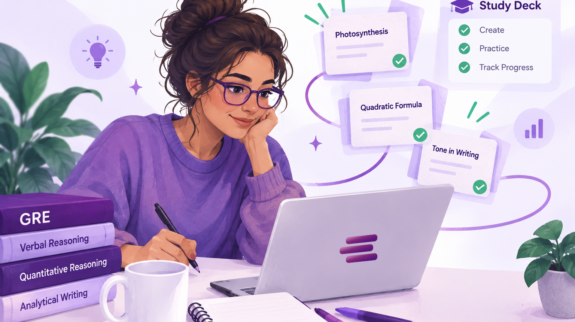
Then turn these into a flash card deck you can practice with, question on the front and your prepared answer on the back. Flash cards are just one of the AI study tools that turn your own research into review material.
See a sample: This PhD defense Q&A practice deck shows what AI-generated committee questions look like. The 12 cards cover opening questions, methodology challenges, contribution probes, and the dreaded “I’m not convinced this is a sufficient contribution” scenario. Each card includes coaching on why the committee asks it and what traps to avoid.
Still, the flash card format matters. Reading your answers silently does not prepare you. Flipping a card, seeing a hostile question, and saying your answer out loud is rehearsal. That builds the muscle memory, so you do not freeze when a real committee member leans forward and says, “But how do you know it’s not just the retriever doing the work?”
Step 3: Play Devil’s Advocate on Your Own Contribution
Every dissertation committee asks some version of three questions:
- “What’s the contribution?” Can you state it in one sentence?
- “Why should we believe you?” Is the evidence sufficient?
- “What would you do differently?” Do you have intellectual maturity about your own limitations?
Most candidates prepare #1 and #3 but underestimate #2. The evidence question is where CoChat’s adversarial mode shines.
Upload your discussion chapter and try:
- “Steelman the argument that my results are an artifact of my data selection, not a genuine finding.”
- “If a reviewer wanted to reject this dissertation, what would their three strongest arguments be?”
- “My contribution claim is [X]. Find published work that already does something similar and explain how my committee might argue I haven’t added enough novelty.”
This is the part of thesis defense preparation that feels uncomfortable. You are asking AI to build the case against your own PhD. But that discomfort is exactly the point. You are doing it now, in your office, with time to think and prepare, instead of doing it for the first time in front of five professors.
Step 4: Build a Thesis Defense Preparation Checklist
The week before your defense is when anxiety peaks and productivity drops. A structured checklist, with priorities and timing, keeps you focused on what actually matters instead of re-reading Chapter 3 for the ninth time.
Grab a template: This defense week checklist is a 13-item preparation plan, prioritized and timed from seven days out to the night before. It includes the obvious, like checking the room’s projector, and the non-obvious, like identifying three recent papers your committee members published so you know how your work connects to their current interests.
The most important item on that list? “Prepare your ‘I don’t know’ response.”
Every candidate fears getting a question they cannot answer. It will happen. The difference between a pass and a rough pass is how you handle it:
- Bad: A long, rambling, increasingly desperate attempt to construct an answer in real time.
- Good: “That’s a question I haven’t fully explored. Based on what I know, I’d hypothesize [X], but I’d want to [specific follow-up] before committing to that answer. It’s a great direction for future work.”
Practice that response until it is comfortable. It shows intellectual honesty, not weakness.
Step 5: Research Your Committee Before the Defense
This is the step most candidates skip, and it is one of the highest-leverage things you can do.
Your committee members are researchers with their own interests, methodological preferences, and pet concerns. If your external examiner just published a paper on reproducibility in your field, they are going to ask about your replication strategy. If your committee statistician is known for caring about effect sizes over p-values, you should know that before you walk in.
Use CoChat’s research tools to:
- “Search for recent publications by [committee member name] in [field]. Summarize their last 3 papers and identify themes that might connect to my dissertation.”
- “Based on [committee member]’s recent work on [topic], what questions might they ask about my approach to [related method]?”
One caution here, and it is the whole point of doing this in CoChat rather than a tool that guesses: verify every paper it surfaces. Open the DOI, confirm the paper is real, and check that it actually says what the summary claims before you build an answer around it. Walking in citing a paper an AI invented is worse than not preparing at all. You stay the author and the verifier; the tool just helps you get there faster.
This is not about gaming the system. It is about respect. You show that you understand your committee as researchers, not just as gatekeepers. And it is about preparation. If Dr. Martinez published a paper last year arguing against the exact methodology you used, you should know that before she brings it up.
Step 6: Build a Thesis Defense Prep Assistant
Everything above works in a single chat. But you will run this prep over days, across chapters, in dozens of separate conversations. Do not start from a blank prompt each time. Build an assistant once, and it remembers your instructions, your tone, and the way you want to be challenged every time you open it.
You have two paths. Pick the one that matches how much setup you want to do.
Path 1: Start From a Template
If you want to be running in two minutes, start from CoChat’s Research Assistant template. It comes pre-wired for academic work, with the research integrations already connected: arXiv, Semantic Scholar, CrossRef, and OpenAlex. That means when you ask it to check how your work connects to a committee member’s recent paper, it can actually search for the paper instead of guessing.
Create it, rename it “Thesis Defense Prep,” upload your dissertation, and add one line to its instructions: “Challenge my claims like a skeptical committee member.” That is enough to turn a general research helper into a defense partner.
Path 2: Build a Custom Assistant
If you want an assistant tuned specifically for adversarial defense prep, create a new assistant and paste this into its instructions:
You are my thesis defense prep partner. Your job is to pressure-test my thinking, not to reassure me. When I share a chapter, a claim, or an argument, do three things: (1) identify the weakest assumption and explain how a skeptical committee member would attack it, (2) surface any claim that my evidence does not fully support, and (3) generate three hard questions an external examiner from an adjacent field would ask. Be direct and specific. Do not soften your critique to make me feel better. When I ask, search arXiv, Semantic Scholar, CrossRef, and OpenAlex to check how my work connects to published research and to find counterevidence. Always tell me when a claim needs a source rather than inventing one.
Upload your dissertation to the assistant, and it will apply that lens to everything you send it, in every conversation, without you re-explaining what you want.
Either way, the point is the same: your prep lives in one place that gets sharper the more you use it, instead of scattering across a dozen chats you will never find again.
Step 7: Turn On the Right Defense Prep Skills
Assistants remember what you want. Skills teach your assistant how to do specific things well. Turn them on once in your assistant’s settings, and they shape how it responds from then on. Three skills turn a general research helper into a defense partner.
Grill Me (start here)
This is the one that matters most for defense prep. Grill Me puts CoChat in adversarial mode: it interrogates your claims, follows up on weak answers, and keeps pushing instead of accepting your first response. It is the difference between an assistant that summarizes your chapter and one that acts like the toughest person on your committee.
Activate it, then say: “Grill me on my methodology chapter. Ask one question at a time, follow up on anything I answer weakly, and don’t let me off the hook.” You get pushback before a real examiner does, in a room where the only thing at stake is your practice run.
Giving Presentations
Your defense is not just answers, it is delivery. Giving Presentations gives you feedback on pacing, structure, and clarity, so your 20-minute talk lands instead of running long or burying your contribution on slide 34. Paste your talk outline or your opening remarks and ask where you are losing the room.
Doc Coauthoring
When you are tightening your opening statement or drafting the two-sentence answers to “What’s your contribution?” and “What would you do differently?”, Doc Coauthoring helps you write and revise in place, matching an academic register without turning your voice into boilerplate.
Together, these three cover the full defense: Grill Me sharpens your answers, Giving Presentations sharpens your delivery, and Doc Coauthoring sharpens what you write down. Turn them on in your Thesis Defense Prep assistant and they apply every time you open it.
The Night Before Your Defense: Stop Preparing
This matters enough to say directly: the night before your defense, stop.
Do not re-read your dissertation. Do not run through your slides one more time. Resist the urge to generate one more set of practice questions at midnight.
You have done the work: the dissertation, and now the adversarial prep. Your committee is not trying to trick you. They have read your work. They approved you for defense. In most programs, being approved to defend means your committee already believes you will pass. The defense is the formality that proves it.
Eat dinner. Watch something mindless. Sleep.
You know your work better than anyone in that room. Tomorrow, you prove it.
Set Up Your Thesis Defense Preparation in 10 Minutes
You do not need a week to start this. Here is the fastest path:
- Sign up at app.cochat.ai. The free tier includes everything you need.
- Upload your dissertation PDF or key chapters.
- Ask it to attack. Start with “Find the 5 weakest claims in my methodology chapter.”
- Generate a Q&A flash deck from the questions it surfaces, then practice out loud.
- Research your committee. Search their recent publications and anticipate their angles.
That is it. Ten minutes to start. A few hours spread across the week before your defense build genuine confidence, the kind that comes from knowing you have already faced the hardest questions, not from hoping they will not come up.