Student or educator? Sign up with your school email and get 6 months of Pro free.

INTERACTIVE DOCUMENTS & ARTIFACTS

Real, editable documents, built inside your chat.

Ask for a LaTeX paper, a runnable Python notebook, a dashboard, a literature review table, or a diagram, and get a real, editable artifact you can comment on and refine, not a wall of text to copy out.

Free to start. Export to .tex, .csv, .py, .pdf, and more. Every document is editable and yours.

WHAT IT IS

What are interactive documents in CoChat?

Interactive documents in CoChat are live, editable artifacts the AI builds inside your chat: a LaTeX paper, a markdown report, a spreadsheet, a runnable Python script, a dashboard, a diagram, and more than a dozen other types. Unlike a static answer you copy out, an artifact renders, exports, and updates as you and the AI revise it together.

Most AI tools hand you a block of text. You copy it, paste it into Word or Overleaf, and the link to the AI is gone. The next change means another copy-paste round trip.

CoChat gives you an artifact instead: a real, structured object in a side panel. Math renders, code runs, tables sort, diagrams draw. Leave a comment and CoChat revises it. Make an edit and it persists. The document is a shared workspace between you and the AI, not a one-time printout.

HOW IT WORKS

Ask, build, refine, export

1
Ask in plain language.
Describe what you need and CoChat builds it as an artifact in a side panel, rendered and ready.
2
Edit it directly
Change the text, the numbers, the code. Your edits persist across sessions.
3
Comment for revisions
Highlight a passage, leave a comment, and CoChat applies just that change in place. No regenerating the whole document.
4
Export anywhere.
Clean .tex, .csv, .py, .pdf, Anki, BibTeX, and RIS. No lock-in.
THE ARTIFACT LIBRARY

20+ artifact types, one workspace

Every artifact is editable by you, revisable by the AI, exportable, and persistent across sessions.

Documents and writing

LaTeX documents

Equations, proofs, and full papers with live-rendered math (KaTeX), exportable as .tex

SPOTLIGHT: LaTeX

Built for the math other AI tools mangle

For academic and STEM work, the document is the math, and most AI tools either cannot render it or break it. CoChat treats LaTeX as a first-class artifact.

1
Live-rendered math.
Inline and display, plus align, gather, cases, and matrices, rendered via KaTeX.
2
Full-paper structure.
Title, authors, and sections render in the preview.
3
Verified citations built in.
Every reference checked against CrossRef.
4
Clean .tex export.
Standard packages, preamble preserved.
5
Research to draft in one place.
Search the sources, verify them, then draft.
Spectral Bounds for Sparce random graphs KaTeX render

THE RESULT:
A real document that renders its math, takes a comment, and revises in place, ready to export. The question a skeptic asks, “do I get a usable document or just more text?”, is answered by the artifact itself.

THE WORKFLOW IT UNLOCKS

The document is where your research comes together.

A document is rarely the end of the work. In CoChat it is where the rest of it lands.

The paper you draft in LaTeX pulls from the sources you already verified. The literature review table you build becomes the evidence section of your manuscript. The dashboard you make reads from the data in your project. Because every artifact lives in the same workspace where you search, verify, and cite, your documents are connected to the research behind them instead of being disconnected exports, and they stay editable across sessions instead of being rebuilt from scratch each time.

BEFORE / AFTER

Static AI output vs. living artifacts

Typical AI Tool

CoChat Artifacts

What you get

A block of text to copy out

A rendered, structured artifact in a side panel

Math

Often broken or unrendered

Live KaTeX rendering, .tex export

Code

A snippet you run elsewhere

Runnable in-browser with real output

Editing

Re-paste the whole thing to change a line

Comment on a passage, the AI revises in place

Persistence

Gone when you scroll away

Persists across sessions, exportable

Range

Text only

20+ types: LaTeX, code, sheets, dashboards, diagrams, more

Citations

Often fabricated

Verified against CrossRef

WHY COCHAT

CoChat builds documents, not dead text.

An AI answer is a dead end: you read it, copy what is useful, and the tool forgets it existed. An artifact is a starting point: it renders, it runs, it exports, and it keeps improving as you work on it.

That difference compounds for technical and academic work, where the output is not a paragraph, it is an equation that has to render, a script that has to run, a table whose sources have to be real. A tool that hands you plain text leaves the rendering, the running, and the verifying to you. CoChat does them in the artifact, and because the artifact lives in the same workspace as your search, your citations, and your project, the document you build here is connected to the work behind it and stays yours to reuse.

20+ artifact types

from LaTeX to runnable Python to verified literature tables

Live rendering

math (KaTeX), charts (Vega-Lite), diagrams, and 3D, in the panel

Comment to revise

point at a passage, get a targeted rewrite

Always exportable

.tex, .csv, .py, .pdf, Anki, and more, no lock-in

WHO USES IT?

Same artifacts, different work

Same capability, different context. See how interactive documents work across fields and roles.

FAQ

Frequently asked questions

1. Can CoChat write LaTeX documents?
Yes. CoChat generates LaTeX as a live, editable artifact, with equations and full papers rendered via KaTeX (inline, display, align, gather, matrices, and more). Titles, authors, and sections render in the preview, and you export clean .tex for your compiler or journal submission. Citations in the document are verified against CrossRef.
2. Is CoChat an Overleaf alternative?
For AI-native academic writing, yes. CoChat drafts LaTeX with live-rendered math and verified citations, and researches your sources in the same workspace, then exports clean .tex. Overleaf is a full TeX compiler; CoChat is the AI drafting and rendering layer that produces .tex you can take anywhere, including into Overleaf for final compilation.
3. Can I edit the documents CoChat creates, or just regenerate them?
You edit them directly, and you can leave a comment on any passage for CoChat to revise in place, with no regenerating the whole document. Highlight the text, say what you want changed, and the AI applies just that change. Your manual edits persist too.
4. What kinds of documents can CoChat make?
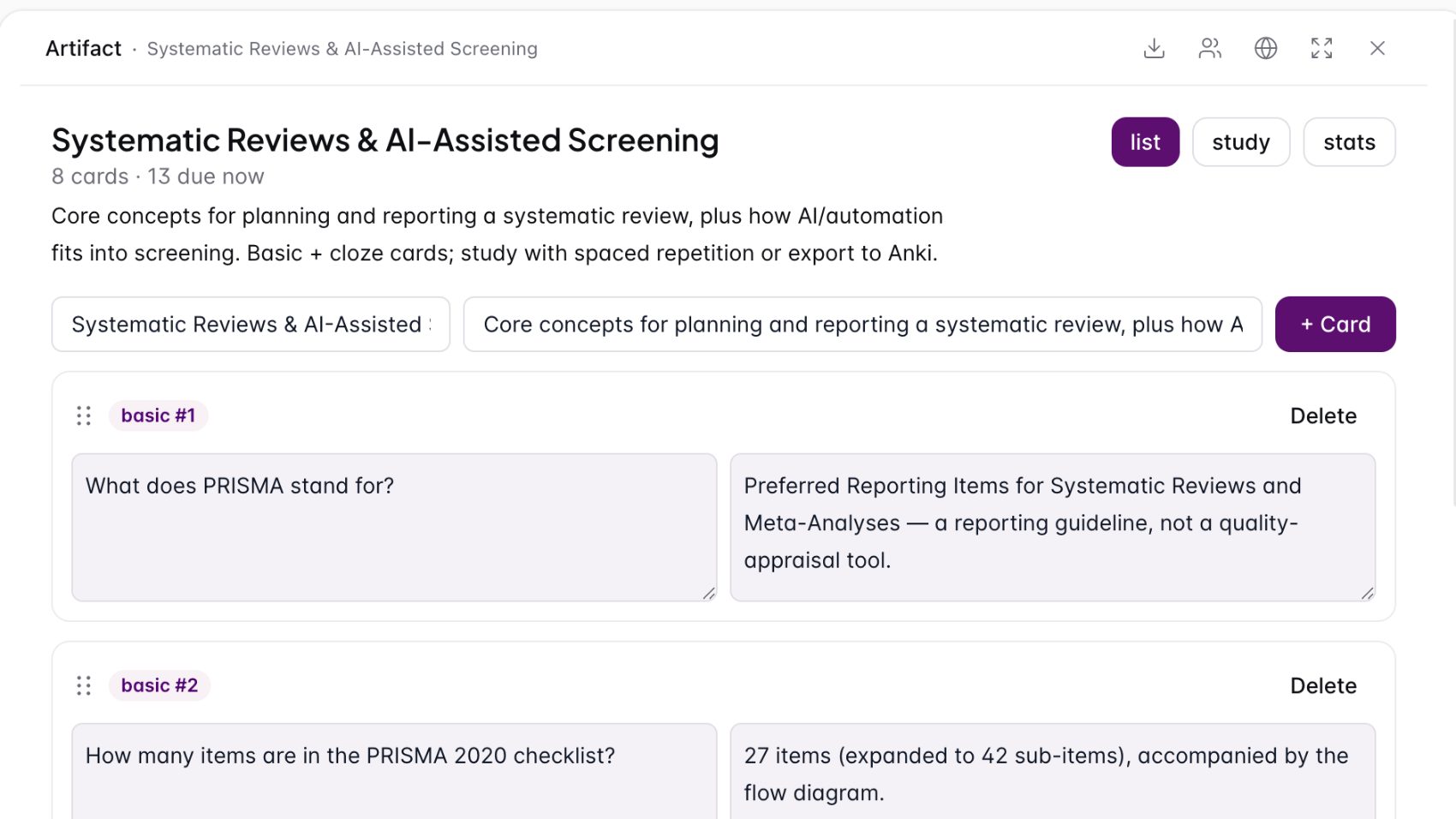
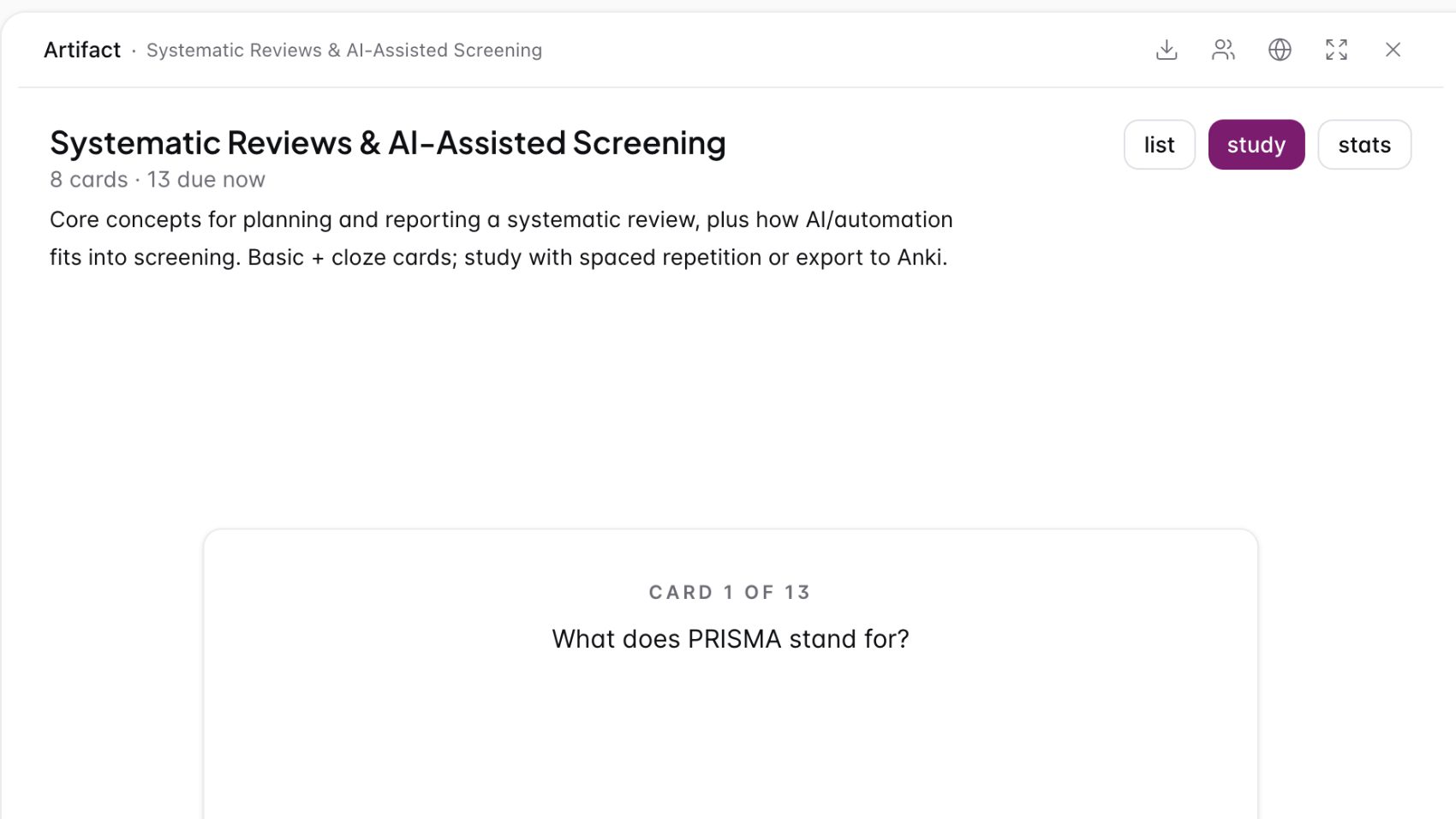
More than 20 artifact types: LaTeX and markdown documents, spreadsheets, runnable Python scripts, dashboards, diagrams and charts, literature review tables, PRISMA flows, flashcard decks, wikis, kanban boards, decision matrices, HTML apps, circuit simulators, 3D models, sheet music, and more, all editable and exportable.
5. Do CoChat documents export, or am I locked in?
Everything exports. LaTeX to .tex, spreadsheets to CSV, Python to .py, documents to PDF, flashcards to Anki, literature tables to BibTeX, RIS, or CSV. No lock-in.
6. Can my team collaborate on a document?
Yes. CoChat supports shared chats and projects, so your team can work alongside the AI on the same artifacts, leaving comments and making edits together. Comments you leave are read by the AI and addressed directly.

Stop copying AI text. Start building documents.

LaTeX with rendered math. Runnable code. Verified literature tables. Dashboards, diagrams, and more, all editable, comment-able, and exportable, in one workspace.

Free to start. Every document is yours to edit, comment on, and export.