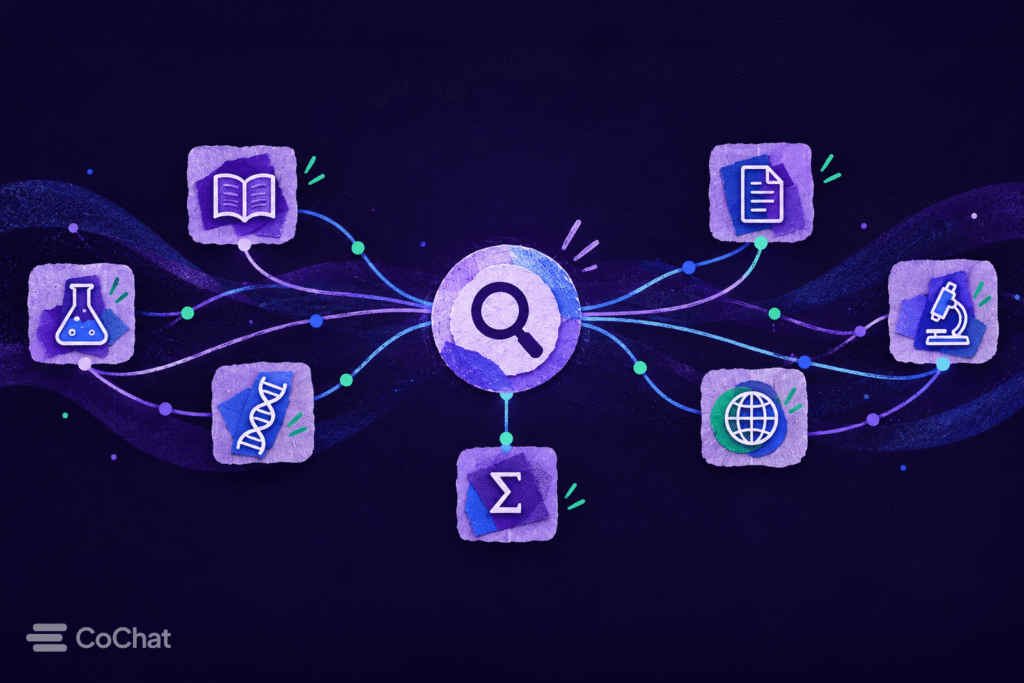
No other AI research platform gives you this many sources in one search.
Most AI research tools search one database. Maybe two. You get results from a single index, and you hope it’s comprehensive enough.
It usually isn’t.
Elicit searches Semantic Scholar. Consensus searches Semantic Scholar and OpenAlex. Scite.ai uses its own proprietary index. Every tool has blind spots — papers that exist but never surface because they live in a database your tool doesn’t check.
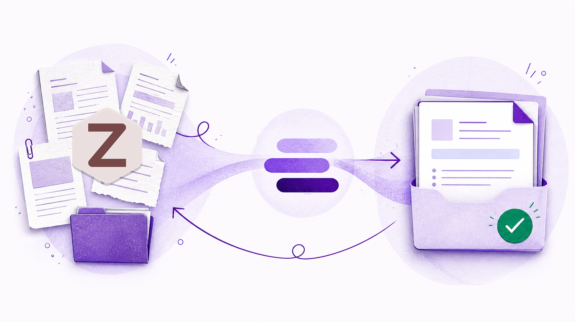
Today, CoChat adds two powerful new sources to its research stack: CORE and Europe PMC. That brings our total to seven integrated academic databases — more than any other AI research tool on the market.
What’s New: CORE and Europe PMC
CORE — The World’s Largest Open Access Collection
CORE (COnnecting REpositories) is the world’s largest aggregator of open access research. It collects and indexes full-text papers from over 13,000 data providers — institutional repositories, subject repositories, and open access journals worldwide.
Why it matters for your research:
- 374 million searchable scholarly records — many of which aren’t indexed elsewhere
- Full-text access to open access papers, not just abstracts and metadata
- Global coverage from repositories in 150+ countries — especially strong for research from institutions that don’t publish through major commercial publishers
- Preprints, theses, and grey literature that other databases miss entirely
CORE fills a critical gap. Many important papers — especially theses, working papers, and research from smaller institutions — exist in open repositories but never make it into Semantic Scholar or PubMed. Now they surface in your CoChat searches automatically.
Europe PMC — Beyond PubMed
Europe PMC is a comprehensive life sciences literature database providing access to over 46 million records. Think of it as PubMed’s broader, more inclusive cousin.
Why it matters for your research:
- 46+ million life science records — including everything in PubMed plus additional sources
- Preprints from bioRxiv and medRxiv indexed alongside peer-reviewed articles
- Patents, clinical guidelines, and NHS research not found in PubMed
- European research grants linked to publications — useful for understanding funding landscapes
- Full-text mining capabilities across open access content
If you’re in biomedical research, health sciences, or any life science field, Europe PMC surfaces papers and documents that PubMed alone misses — particularly preprints, European institutional research, and clinical guidelines.
The Full CoChat Research Stack
Here’s what you now search with a single prompt in CoChat:
| Database | What It Covers | Records |
|---|---|---|
| arXiv | Preprints in physics, math, CS, biology, quantitative fields | 2.5M+ papers |
| PubMed | Biomedical and life sciences (peer-reviewed) | 37M+ citations |
| Semantic Scholar | General academic literature with AI-powered relevance | 214M+ papers |
| OpenAlex | Open catalog of the global research system | 270M+ works |
| CrossRef | DOI registry and citation metadata | 183M+ records |
| CORE | Open access full-text from 13,000+ repositories | 374M records |
| Europe PMC | Life sciences including preprints, patents, guidelines | 46M+ records |
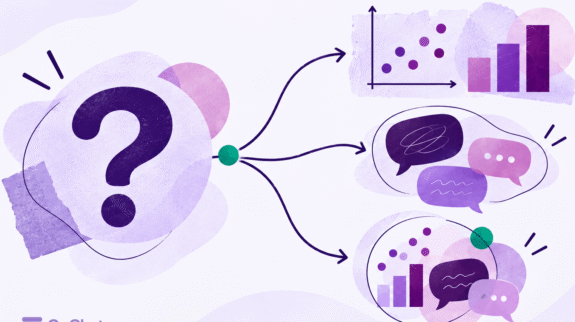
One search. Seven databases. Deduplicated results.
Why This Matters: The Coverage Gap Is Real
Here’s a fact that should bother every researcher relying on a single-database AI tool:
No single academic database contains all published research.
- A paper published in a small institutional repository in Brazil might be in CORE but not Semantic Scholar.
- A preprint on medRxiv might be in Europe PMC but not PubMed (until it’s peer-reviewed).
- A conference paper with a DOI might be in CrossRef but not OpenAlex.
- A working paper on arXiv might take months to appear in Semantic Scholar.
When your AI research tool only searches one or two databases, you’re systematically missing papers. You don’t know what you don’t know — which is the worst kind of gap in a literature review.
CoChat eliminates this problem by searching across all seven sources and deduplicating the results. If a paper exists in any of these databases, you’ll find it.
How CoChat Compares
| Tool | Databases Searched | Full-Text Access |
|---|---|---|
| CoChat | 7 (arXiv, PubMed, Semantic Scholar, OpenAlex, CrossRef, CORE, Europe PMC) | ✅ Via CORE OA |
| Elicit | 1-2 (Semantic Scholar, PubMed) | ❌ Abstracts only |
| Consensus | 2 (Semantic Scholar, OpenAlex) | Partial (publisher partnerships) |
| Scite.ai | 1 (proprietary index) | Partial (publisher partnerships) |
| ResearchRabbit | 2 (Semantic Scholar, OpenAlex) | ❌ Abstracts only |
| Perplexity | Web crawl (not database-specific) | ❌ No academic DB access |
No other AI research tool integrates seven academic databases. Most rely on one or two and hope the coverage is enough. It often isn’t.
What This Means for Your Literature Review
If you’ve read our recent guide on AI literature reviews in CoChat, you already know how to search, organize, and export research from a single conversation. These new data sources make that workflow significantly more powerful:
Before (4 databases):
You could search arXiv, Semantic Scholar, CrossRef, and OpenAlex. Strong for CS, physics, and general academic literature. Gaps in biomedical preprints, open access full-text, and non-English institutional research.
Now (7 databases):
You get everything above, plus:
- Full-text open access papers via CORE (not just abstracts)
- Biomedical preprints from medRxiv and bioRxiv via Europe PMC
- Theses, dissertations, and grey literature via CORE
- Clinical guidelines and patents via Europe PMC
- Research from 13,000+ global repositories that other tools miss entirely
The workflow stays the same — ask a question, get results, organize into a literature review table, export. But the results are now more comprehensive than what you’d get from any other AI research tool.
Full-Text Access: The Quiet Superpower
Here’s something most AI research tools don’t talk about: they only read abstracts.
When Elicit or Consensus “analyzes” a paper, it’s typically working from the abstract and metadata — not the full text. That’s fine for basic discovery, but it means the AI can’t tell you what’s in section 4.2, can’t extract methodology details from the methods section, and can’t find specific data points buried in supplementary tables.
With CORE integration, CoChat can now access full-text versions of open access papers. This means:
- Deeper extraction — pull specific data points, not just abstract-level summaries
- Better verification — check whether a paper actually says what a citation claims it says
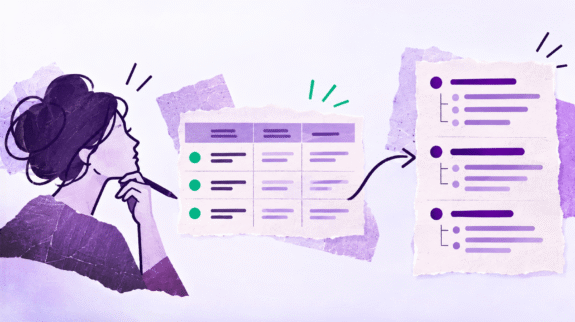
- Richer literature review tables — populate columns with information from the full paper, not just the abstract
This directly powers our literature review table feature. When you ask CoChat to extract methodology details or specific findings into your review table, it can now read the actual paper — not guess from the abstract.
Who Benefits Most
Biomedical & Health Researchers
Europe PMC + PubMed together give you the most comprehensive life sciences coverage available in any AI tool. Preprints, patents, clinical guidelines, and peer-reviewed articles — all searchable from one prompt.
Interdisciplinary Researchers
Working across fields? The seven-database stack means you don’t have to know which database covers your niche. Search once, find papers from CS, medicine, social science, and humanities in a single result set.
Graduate Students
Writing a thesis? Your committee will ask “did you search broadly enough?” Now you can honestly say: “I searched seven databases simultaneously.” That’s more thorough than most manual systematic reviews.
Educators
Building reading lists or course materials? The broader coverage means you’ll find papers from diverse institutions and perspectives — not just the usual suspects from high-impact journals.
Try It Now
The new integrations are live. No setup required — just ask a research question and CoChat will search all seven databases automatically.
- Start a free conversation at app.cochat.ai
- Ask any research question
- Watch results come in from arXiv, PubMed, Semantic Scholar, OpenAlex, CrossRef, CORE, and Europe PMC
- Organize into a literature review table, generate flash cards, or export as CSV
Your research deserves more than one database. Now it gets seven.
Related: AI Literature Review: Search, Organize, and Export — From One Conversation · How to Build an AI Literature Review in Half the Time